Easy Homemade Croissants
Highlighted under: Pastry & Sweets
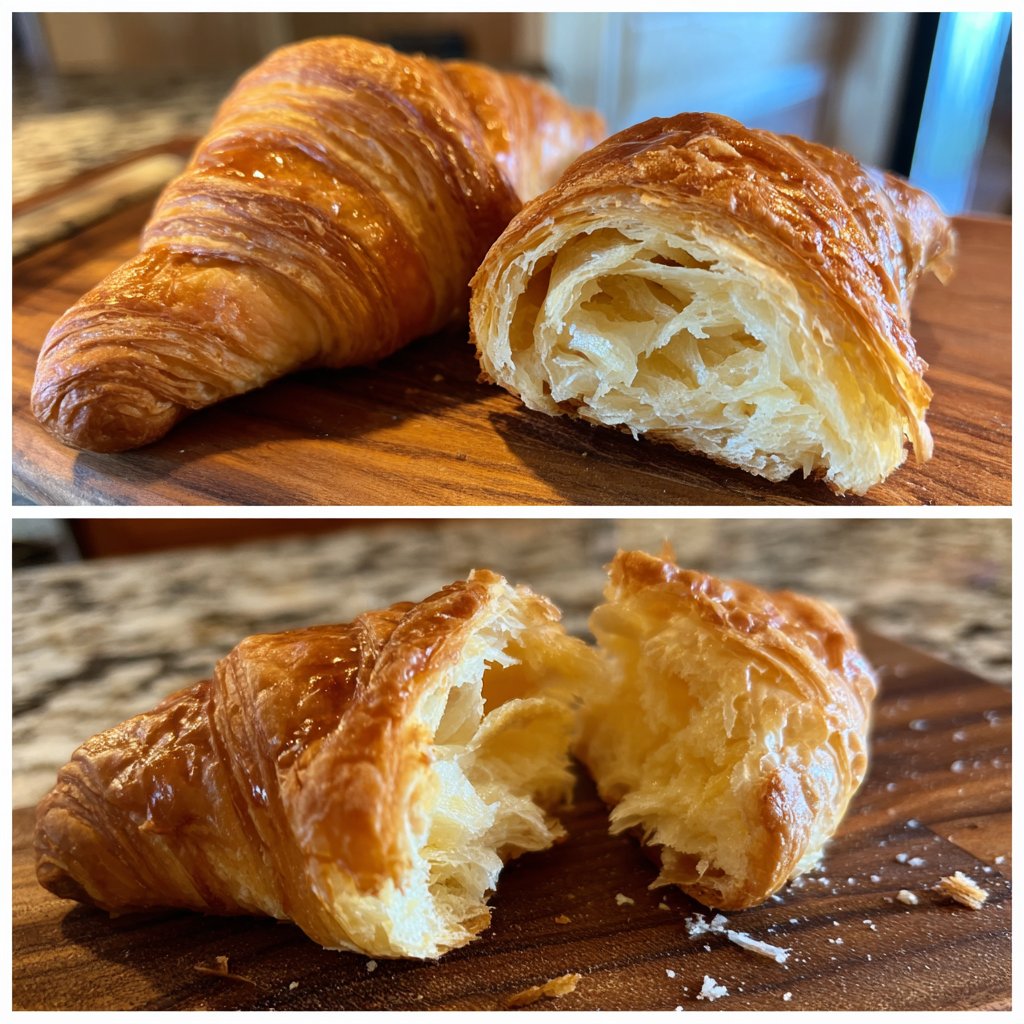
I absolutely love making my own croissants at home! It’s a delightful process that fills my kitchen with the warm aroma of fresh-baked pastry, and the results are nothing short of magical. The flakiness of each layer, paired with a touch of butter, makes for a truly irresistible treat. I find that with a little patience and the right techniques, anyone can achieve those perfectly golden, buttery croissants. Trust me, once you try these homemade delights, store-bought options will feel bland in comparison!
When I first tackled homemade croissants, I was intimidated by the process but determined to create that beloved buttery layer. After several attempts, I learned that the key is in the dough's temperature; keeping it cool helps achieve that perfect flaky texture. The first time I pulled a warm croissant from the oven, I knew all the effort was worth it!
One of my favorite tips is to give your dough ample resting time in the fridge overnight. This not only enhances the flavor but also makes rolling out the dough easier. The next morning, I woke up to the smell of baked pastries, and it felt like I was in a French bakery right at home. You’ll feel accomplished with each bite!
Why You'll Love These Croissants
- Flaky layers that melt in your mouth
- Rich buttery flavor that rivals any bakery
- Customize with fillings like chocolate, almond, or ham and cheese
The Importance of Proper Dough Handling
When making croissants, the way you handle the dough is crucial to achieving flaky layers. The process of kneading develops gluten, which gives the dough structure. However, over-kneading can lead to tough croissants. Aim for a soft, elastic texture after about 5 minutes of kneading. Always use a light touch when rolling and folding to keep the layers intact and airy, which is essential for that sought-after flakiness.
Temperature control is vital during the lamination process. If the butter becomes too soft, it will seep into the dough instead of creating distinct layers. I recommend working in a cool environment and chilling your rolling pin and workspace whenever necessary. If you notice the butter starting to soften, don’t hesitate to pop the dough back in the fridge for 15 to 20 minutes to reset.
Customization and Flavor Variations
One of the joys of making croissants at home is the opportunity to customize them with different fillings. Consider spreading a thin layer of almond paste or Nutella before rolling them up for a sweet treat. For a savory option, try adding thinly sliced ham and cheese. Whichever filling you choose, it's important not to overstuff the croissants to ensure they roll tightly and bake evenly.
You can also experiment with toppings to give your croissants an extra flair. Before baking, sprinkle some sesame seeds or coarse sea salt on top for added texture and flavor. Additionally, brushing the croissants with an egg wash not only imparts a beautiful golden color but also adds a touch of shine. You can mix in a bit of milk to the egg for a slightly silkier finish.
Ingredients
Gather these ingredients to make your delicious croissants:
Croissant Dough
- 4 cups all-purpose flour
- 1/2 cup unsalted butter, softened
- 1/4 cup granulated sugar
- 2 teaspoons salt
- 1 cup whole milk, warm
- 2 teaspoons active dry yeast
- 1 large egg, for egg wash
Make sure to have all ingredients at room temperature before starting.
Instructions
Here’s how to bring your homemade croissants to life:
Prepare the Dough
In a bowl, combine warm milk and yeast. Let it sit for 5 minutes until frothy. In a large mixing bowl, combine flour, sugar, and salt. Add the milk mixture and softened butter, mixing until a soft dough forms. Knead for about 5 minutes until smooth. Cover and let rise in a warm spot for 1 hour.
Laminate the Dough
Roll out the dough into a rectangle and place cold butter in the center. Fold the dough over the butter to encase it. Roll out again and perform a series of folds, refrigerating in between each fold to keep the butter cold. Repeat this for a total of 4 folds.
Shape the Croissants
Roll the dough out into a large rectangle and cut it into triangles. Starting from the base, roll each triangle tightly to form croissants. Place them on lined baking sheets and let them rise for another hour.
Bake
Preheat the oven to 400°F (200°C). Brush the croissants with the egg wash and bake for 20-25 minutes until golden brown. Let cool on a wire rack before serving.
Enjoy your gorgeous homemade croissants fresh out of the oven!

Pro Tips
- For extra flavor, you can add some vanilla extract to the milk mixture. Additionally, make sure your butter is cold when you begin the lamination process to ensure those flakey layers.
Storage Tips for Freshness
If you have leftover croissants, it's essential to store them properly to maintain their freshness. Allow them to cool completely on a wire rack before placing them in an airtight container. They can be kept at room temperature for up to two days. If you want to store them for a longer period, consider freezing them. Wrap each croissant tightly in plastic wrap and place them in a freezer-safe bag. They can last in the freezer for up to three months.
To reheat frozen croissants, preheat your oven to 350°F (175°C). Remove the plastic wrap and place them directly on a baking sheet. Heat for about 10-15 minutes until they’re warmed through and slightly crisp. Avoid using the microwave, as it can make them chewy rather than flaky.
Troubleshooting Common Issues
Sometimes, croissants can come out less than perfect, but don't worry; many issues have easy fixes. If your croissants don't rise as expected, double-check that your yeast is fresh and that the milk was warm—not hot—when added. The yeast should become frothy after about 5 minutes in warm milk. If they don't puff up during baking, it might be due to overly warm butter that melted into the dough instead of maintaining distinct layers.
Another common issue is ending up with tough croissants. This can sometimes occur if the dough was rolled too thinly or overworked during the lamination process. To correct this in future batches, focus on maintaining the right thickness while rolling (about 1/8 inch is ideal) and handle the dough gently, ensuring you refrigerate it adequately between folds.
Questions About Recipes
→ Can I freeze the croissants before baking?
Yes, you can freeze the shaped croissants. Just place them on a baking sheet, freeze until solid, then transfer to a zip lock bag. Bake from frozen, adding a few extra minutes to the baking time.
→ How long do the baked croissants last?
Baked croissants are best enjoyed fresh but can be stored in an airtight container for 2-3 days.
→ What if my dough isn't rising?
Make sure the yeast is fresh and that your dough is kept in a warm spot. If it's too cold, the yeast may not activate properly.
→ Can I use whole wheat flour?
Yes, but the croissants might be denser. Consider using a mix of all-purpose and whole wheat flour for better results.
Easy Homemade Croissants
Created by: Maya Richardson
Recipe Type: Pastry & Sweets
Skill Level: Intermediate
Final Quantity: 12 croissants
What You'll Need
Croissant Dough
- 4 cups all-purpose flour
- 1/2 cup unsalted butter, softened
- 1/4 cup granulated sugar
- 2 teaspoons salt
- 1 cup whole milk, warm
- 2 teaspoons active dry yeast
- 1 large egg, for egg wash
How-To Steps
In a bowl, combine warm milk and yeast. Let it sit for 5 minutes until frothy. In a large mixing bowl, combine flour, sugar, and salt. Add the milk mixture and softened butter, mixing until a soft dough forms. Knead for about 5 minutes until smooth. Cover and let rise in a warm spot for 1 hour.
Roll out the dough into a rectangle and place cold butter in the center. Fold the dough over the butter to encase it. Roll out again and perform a series of folds, refrigerating in between each fold to keep the butter cold. Repeat this for a total of 4 folds.
Roll the dough out into a large rectangle and cut it into triangles. Starting from the base, roll each triangle tightly to form croissants. Place them on lined baking sheets and let them rise for another hour.
Preheat the oven to 400°F (200°C). Brush the croissants with the egg wash and bake for 20-25 minutes until golden brown. Let cool on a wire rack before serving.
Extra Tips
- For extra flavor, you can add some vanilla extract to the milk mixture. Additionally, make sure your butter is cold when you begin the lamination process to ensure those flakey layers.
Nutritional Breakdown (Per Serving)
- Calories: 250 kcal
- Total Fat: 15g
- Saturated Fat: 9g
- Cholesterol: 40mg
- Sodium: 200mg
- Total Carbohydrates: 29g
- Dietary Fiber: 1g
- Sugars: 1g
- Protein: 4g